Published: 23 June 2026 | Last reviewed: 23 June 2026
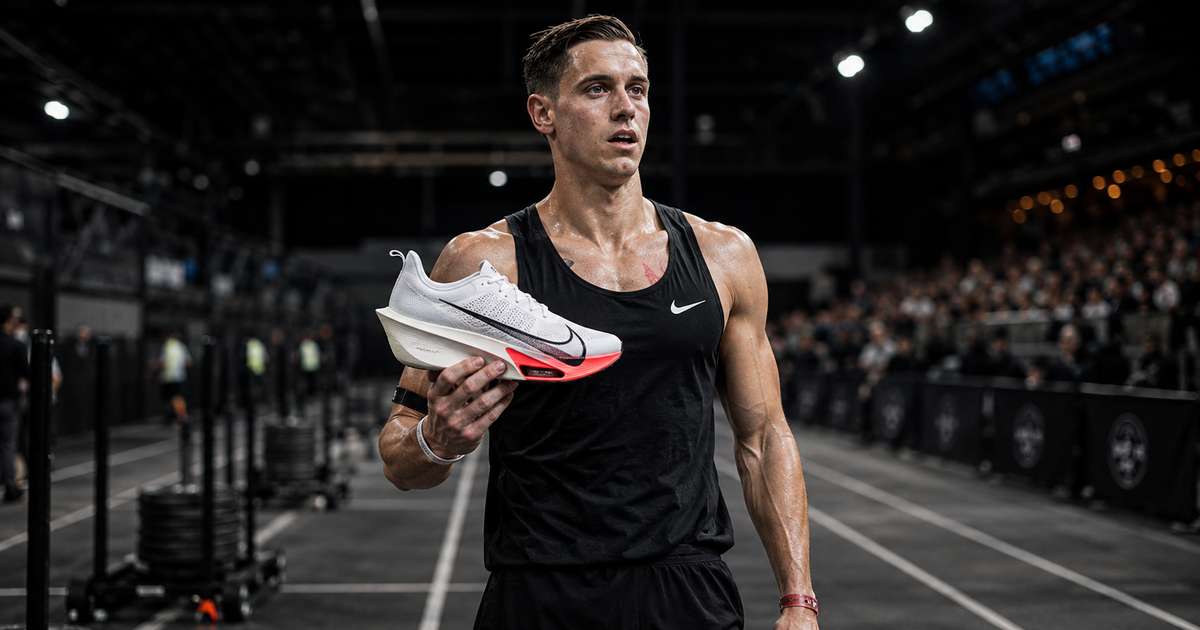
Dylan Scott’s Stockholm victory is interesting not only because he won, but because of how he won. He was not presented as the overwhelming favourite in the way Alexander Rončević or Tim Wenisch might have been. Yet when the race reached its chaotic final stage, Scott produced the composure, pacing, and wall-ball execution required to take the title. His Nike connection adds another layer to the story.
Before HYROX, Scott’s athletic background was already pointing toward elite hybrid performance. He competed as a collegiate runner, developing a strong aerobic base and efficient running mechanics that would later become one of his defining advantages in HYROX (Nike, n.d.). Like many athletes who transition into hybrid racing, Scott combined endurance training with strength work, gradually building the capacity to handle both sustained running and high-output functional movements.
While publicly verified physiological data is limited, Scott is widely regarded as having elite endurance metrics. Estimates of his VO2 max place him in the high-performance range typical of top hybrid athletes, likely in the mid-to-high 60s ml/kg/min or above. More importantly, his race performances suggest exceptional running economy and the ability to maintain pace under fatigue—arguably more critical in HYROX than raw VO2 max alone (Bassett and Howley, 2000). His splits across multiple competitions show consistent sub-3:00/km running segments under compromised conditions, which places him among the strongest runners in the field.
Scott entered HYROX in 2021 and, according to Nike’s own profile, has competed at every HYROX World Championship since (Nike, n.d.). This is important because it means he was not a sudden marketing creation. His rise came first. Nike came later.
The available public record suggests Scott did not begin HYROX as a Nike-sponsored athlete. Nike’s own wording is revealing: after rebuilding himself from injury, discovering HYROX, and rising through the sport, Scott’s progress eventually caught Nike’s attention (Nike, n.d.). He later signed with the brand he had admired for years. Public social-media snippets also indicate that he visited Nike headquarters to tour, test, and sign as Nike’s first American HYROX athlete (Scott, 2024).
That timeline matters. It suggests that Nike did not “make” Dylan Scott a champion. Rather, Scott became the kind of athlete Nike wanted to support.
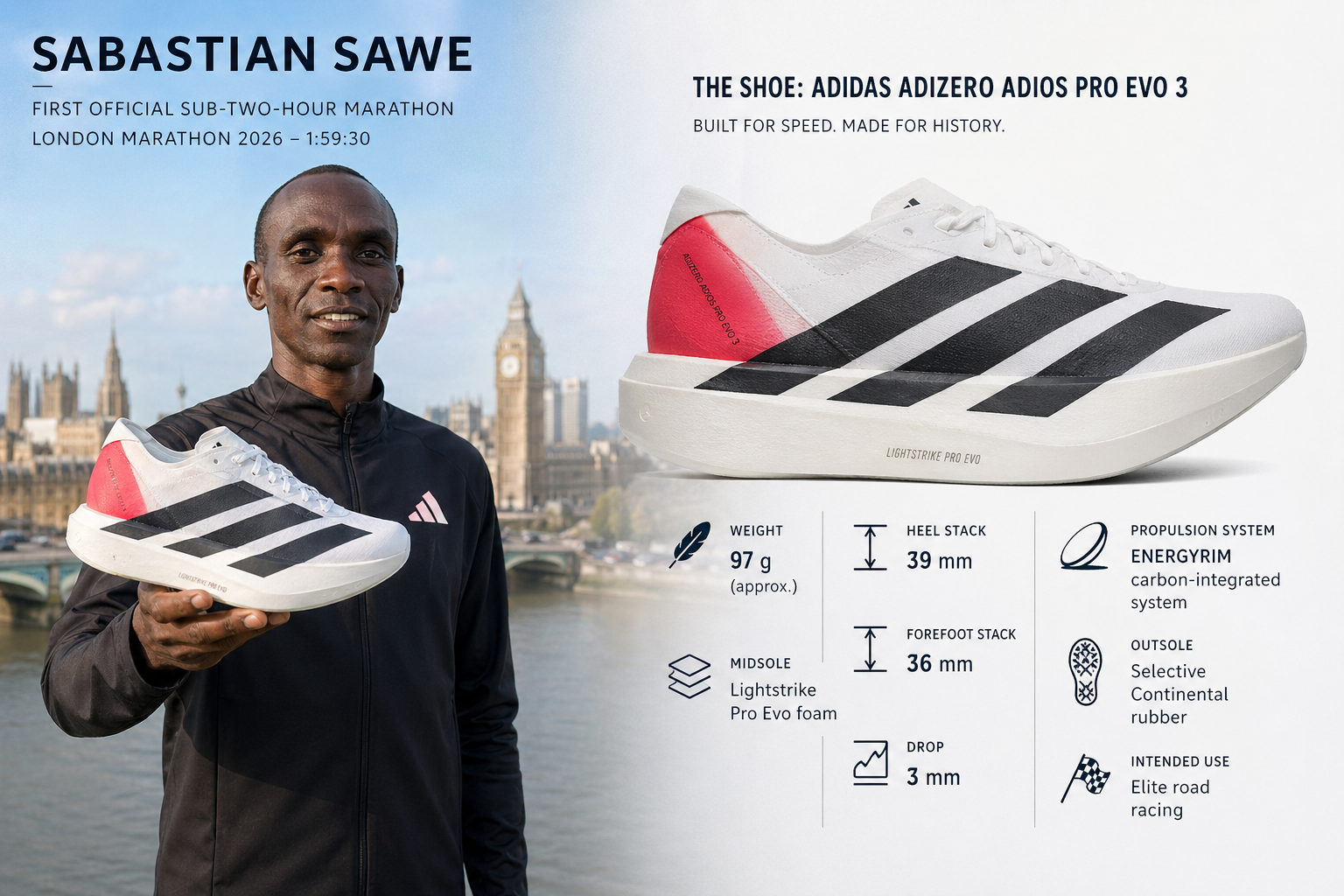
The shoe question is more complicated. Some public athlete listings associate Scott with the Nike Zoom Fly 6, while other HYROX footwear sources list him as a Nike Vaporfly user (RoxRadar, n.d.; RoxLyfe, n.d.). Without a clear post-race confirmation or high-resolution race-day shoe audit from Stockholm, it would be irresponsible to state definitively that he won in one exact model. What can be said is that Scott’s footwear sits within Nike’s modern plated racing ecosystem: high-energy foam, a stiffening plate, lightweight construction, and a geometry designed to make repeated running efforts more efficient (Nike, n.d.).
The Nike Zoom Fly 6 is especially interesting in the HYROX context. It is not Nike’s most extreme marathon super shoe, but it offers a full-length carbon-fibre Flyplate, ZoomX foam, an 8 mm drop, and a weight of approximately 265 g in a men’s UK 9 (Nike, n.d.). That places it in a useful middle category: more propulsive than a normal daily trainer, but potentially more stable and durable than a pure race-day shoe such as the Vaporfly or Alphafly.
For HYROX, that middle ground may matter. The sport is not just eight kilometres of running. It is eight kilometres of compromised running interrupted by sled pushes, sled pulls, burpee broad jumps, rowing, farmer’s carries, lunges, and wall balls (HYROX, n.d.). A shoe that is wonderful on the road can become problematic if it slips on sleds, feels unstable in lunges, or makes transitions awkward.
This is where the Nike-Scott story becomes more interesting than a simple “shoe wins race” narrative. Nike’s support appears to have given Scott more than footwear. He has spoken about performance testing at the LeBron James Innovation Center and the value of receiving insights he could not create by himself at home (Nike, n.d.). In elite HYROX, this may be the real advantage: not just the shoe on race day, but the testing, feedback, and athlete-support environment that helps refine training decisions.
Scott’s Stockholm win should therefore be read carefully. The shoe mattered because it had to survive the demands of HYROX without limiting him. But the shoe did not do the wall balls. It did not manage his pacing. It did not keep him composed while others were caught in penalties, no-reps, and late-race chaos.
Dylan Scott’s Nike story is not about a shoe magically producing a champion. It is about an athlete who had already built himself into a contender, then gained access to one of the strongest performance ecosystems in sport.
The Nike shoe may have been part of the margin. The athlete still had to deliver the margin.Disclaimer: This is an AI-generated editorial image inspired by Dylan Scott, Nike footwear, and HYROX competition created for educational commentary. It is not an official Nike, HYROX, or Dylan Scott image.
About the AuthorMark B. Reyneker, BTech (Podiatry), MSc (Palaeontology) is a podiatrist and Founder & Clinical Director of Family Podiatry Centre, with more than 25 years of clinical experience across South Africa, Malaysia and Singapore. His clinical interests include foot and lower-limb pain, gait and biomechanics, sports-related foot conditions, orthotic therapy and footwear.
Alongside his clinical practice, Mark conducts research into human gait and foot biomechanics. His MSc research at the University of the Witwatersrand investigated human propulsion and the structural properties of the metatarsals. He is also the inventor of
A Foot Orthotic, an orthotic technology developed through an international patent family.
References